Most homeowners in Venice and North Port believe their insurance policy is a static safety net that remains fully intact regardless of whether they are physically present in the home. This is a costly misconception. In nearly every major case of property loss we encounter, the homeowner is stunned to learn that leaving their property for as little as 14 days could trigger a clause that effectively voids their coverage for the most common types of damage.
Your insurance policy is a contract of risk management. When you leave your home for the season, that risk shifts significantly. Without a physical presence or a documented inspection process, you may be unintentionally violating the terms of your agreement.
The Vacancy Clause Most Homeowners Overlook
One of the most uncomfortable truths in Florida real estate is the "vacancy" or "unoccupancy" clause. Most standard homeowners policies include language that limits or excludes coverage if a home is left unattended for a specific period. This period is typically 30 days, though we are increasingly seeing policies with 14-day restrictions.
By the time a homeowner realizes their coverage has lapsed, the damage is already done. If a pipe bursts on day five of your absence and the water runs until day 21, your insurer may argue that the damage was preventable through "reasonable care." In many cases, "reasonable care" is legally defined as a regular, documented inspection of the premises.
Without professional home watch services in Florida, you are essentially self-insuring your home during the months you are away. If a claim is denied due to a lack of oversight, the financial burden rests entirely on your shoulders.

Why Unattended Homes Are a Liability for Insurers
Insurance companies understand the physics of Florida's climate better than most homeowners. They know that in Venice, FL, a minor mechanical failure can escalate into a catastrophic loss in a matter of days. A failed HVAC system leads to soaring interior humidity. High humidity leads to mold colonization.
When a home is occupied, these issues are caught within hours. When a home is empty, they quietly compound. What many homeowners underestimate is that insurers are not just looking for "major" events like hurricanes. They are looking for signs of neglect. If mold is found to have grown over several weeks because the air conditioner failed and no one noticed, the insurer may classify this as a maintenance issue rather than a covered loss.
The surprise most don't anticipate is that a "denied" status on a large claim can also lead to the immediate non-renewal of the policy. Finding new coverage for a home with a history of mold or major water damage in the current Florida insurance market is notoriously difficult and expensive.
The Small Failure That Becomes a Total Loss
In this particular case, we see a recurring pattern. It begins with a $15 supply line behind a toilet. A small crack forms. Water begins to seep, then flow. Because the home is in a quiet neighborhood in Southwest Florida, no one hears the rushing water.
The water travels. It soaks into the baseboards and wicks up into the drywall. It creeps under the luxury vinyl plank or tile. Within 48 hours, the warm, dark spaces behind your cabinets become a breeding ground for mold.
By the time a neighbor notices water trickling out from under the front door ten days later, the entire first floor is a loss. The drywall must be cut out four feet up. The kitchen cabinets are unsalvageable. The HVAC ductwork may have pulled in spores, requiring a full system cleaning or replacement.
One of the most painful aspects of this scenario is that it could have been prevented by a 15-minute walk-through. Professional home watch isn't just about "checking" a house; it is about stopping the clock on a disaster.
Why The Neighbor Check Fails Your Underwriter
Some homeowners assume that having a friendly neighbor stop by to pick up the mail and "glance" at the house is sufficient. While the gesture is valuable, it rarely meets the standard of professional documentation required by insurance adjusters.
Neighbors typically don't:
- Check under every sink for slow drips.
- Cycle the dishwasher and laundry cycles to keep seals from drying out.
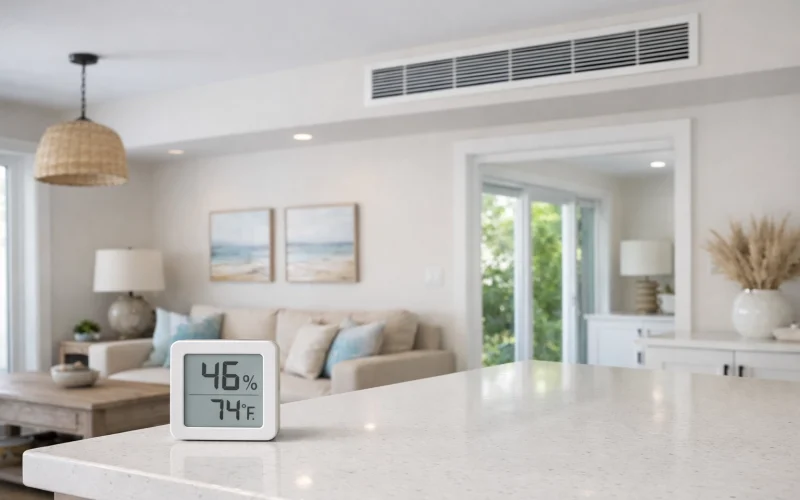
- Check the humidity levels with a hygrometer.
- Inspect the perimeter for signs of pest intrusion or landscape drainage issues.
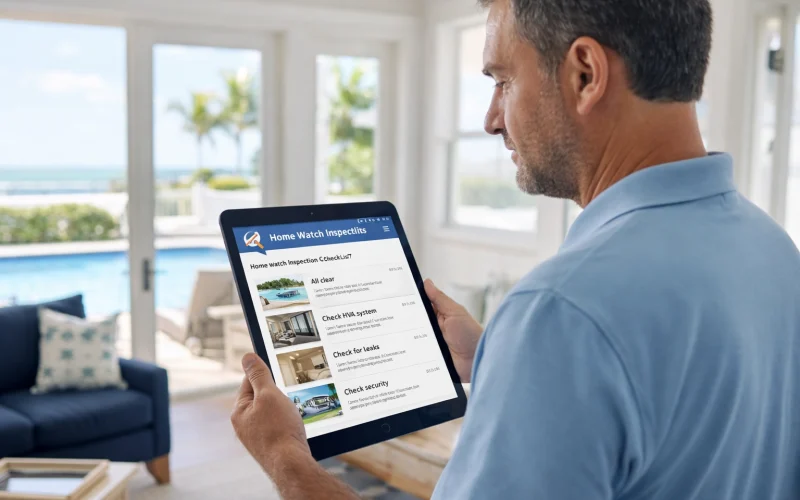
- Provide a timestamped, GPS-verified report of the inspection.
When you file a claim, the insurance company will ask for proof of when the home was last inspected. A neighbor’s verbal confirmation carries little weight. A professional report from a company like Paradise Lifestyle Home Watch serves as a legal record that you exercised "due diligence" in maintaining your property.

The Hidden Danger of Modern Smart Homes
We often hear homeowners say, "I have a smart thermostat and cameras, I don't need a home watch service." This creates a false sense of security. Smart technology is a tool, not a solution.
A camera can tell you if a package was delivered to your Venice doorstep, but it cannot tell you if the air inside your home smells like "dirty socks": a telltale sign of mold growth. A smart thermostat can tell you the temperature is 78 degrees, but it cannot see the water pooling on the floor from a ceiling leak caused by a roof tile that slipped during a summer thunderstorm.
Technology fails. Wi-Fi routers crash. Power surges fry delicate sensors. Without a physical human being to verify the status of the property, these "smart" systems offer an incomplete picture. We specialize in smart home integration, but we always emphasize that tech should supplement professional eyes, not replace them.
Humidity Is the Invisible Enemy in Venice, FL
In Southwest Florida, water damage doesn't always come from a burst pipe. Often, it comes from the air itself. If your HVAC system loses power or experiences a mechanical failure, the interior humidity of your home can rise above 70% in less than 24 hours.
At this level, "biological growth": the industry term for mold: is inevitable. It begins on soft surfaces: rugs, curtains, and furniture. Then it moves to the walls. What began as a simple blown capacitor in your AC unit can grow into a $30,000 mold remediation project.
Our home watch services include precise monitoring of these levels. We identify the HVAC failure before the mold has a chance to take hold. This proactive approach is the difference between a simple repair call and a month-long renovation.
Documentation Is Your Best Defense
If you do suffer a loss, your insurance company will conduct a thorough investigation. They will look for any reason to mitigate their payout. Having a consistent log of professional inspections is your strongest leverage.
We provide our clients with detailed reports that include photos and notes on the condition of all major systems. These reports are stored and can be retrieved instantly if a claim arises. This level of professionalism and accreditation is what separates a legitimate home watch business from a "hobbyist" neighbor.

Establishing Peace of Mind Year-Round
The cost of a home watch service is a fraction of an insurance deductible, let alone the cost of an uncovered loss. It is a vital component of owning a seasonal property in a climate as demanding as Florida’s.
Whether your home is in Venice, North Port, or the surrounding areas, the risks remain the same. The environment is relentless, and your insurance policy expects you to be just as diligent.
Don't wait until you receive a denial letter from your insurance carrier to realize the importance of documented property monitoring. What many homeowners underestimate is how quickly a "vacation home" can become a financial liability without the right eyes on the ground.
Protect your home before the quiet damage starts. Reach out today to learn how our concierge and home watch services can keep your property secure and your insurance coverage intact year-round.