Most homeowners returning to their Venice or Port Charlotte properties after a summer away don’t expect to find black mold climbing their bathroom walls. They don’t anticipate warped hardwood floors or the musty smell that greets them at the front door.
They certainly don’t expect a five-figure remediation bill.
But that’s exactly what happens when Florida’s humidity problem goes unchecked for weeks or months. What begins as elevated moisture levels: something you can’t see or smell initially: transforms into structural damage, health hazards, and insurance complications that cost the average homeowner between $15,000 and $25,000 to resolve.
The Hidden Enemy Inside Florida Homes
Florida’s climate creates the perfect storm for humidity damage. When outdoor temperatures hover in the 80s and 90s with humidity levels regularly exceeding 70%, your vacant home becomes a breeding ground for problems that develop silently, behind walls and inside closed cabinets.

What many homeowners underestimate is how quickly moisture accumulates in an unoccupied property. Without daily activities like opening doors, running exhaust fans, or simply moving air around by walking through rooms, humidity settles into every corner. It seeps into drywall, soaks into furniture, and penetrates wooden surfaces.
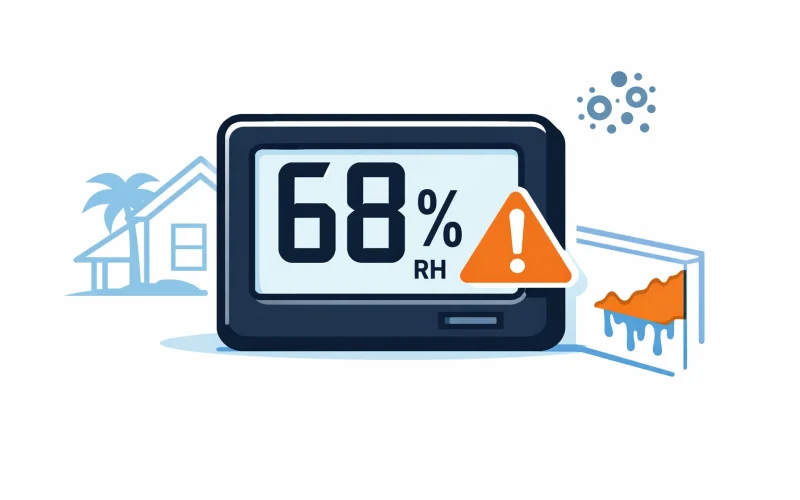
The Environmental Protection Agency warns that indoor humidity above 60% creates ideal conditions for mold growth. In a vacant Florida home during summer months, humidity can easily climb to 75% or higher without proper climate control. At those levels, mold spores: which exist naturally in every environment: begin colonizing surfaces within 24 to 48 hours.
How a Moisture Problem Becomes a $15,000+ Disaster
The progression happens faster than most realize. A home sits empty for six weeks during Wellen Park and Venice’s peak summer season. The thermostat is set to 82° to save money. Interior doors remain closed. The humid air stagnates.
Week one passes without visible issues. But behind that bathroom vanity or inside the HVAC ductwork, moisture is condensing. Mold spores find organic material: drywall paper backing, wooden cabinet interiors, the dust on ceiling tiles: and begin growing.
By week three, colonies have established. The musty smell starts, though no one is there to notice it. Wooden floorboards begin responding to the moisture, expanding slightly. Metal fixtures in bathrooms and kitchens start showing early corrosion.

By the time you return after two months away, the damage has spread. What started as isolated spots of mold has traveled through wall cavities. The wooden trim around windows has warped. Your kitchen cabinets feel sticky to the touch, their finish compromised by constant exposure to humid air. The HVAC system, working harder than designed to combat the humidity, shows signs of strain or has failed entirely.
Professional mold remediation alone typically costs $2,000 to $6,000 for moderate cases. If the problem has spread through ductwork or behind walls, that number climbs to $10,000 or more. Add the cost of replacing warped flooring ($3,000–$8,000), refinishing or replacing damaged cabinetry ($2,000–$5,000), repairing drywall, and addressing any HVAC issues, and the total easily exceeds $15,000.
One of the most painful aspects? Many homeowners discover that their insurance policy provides limited or no coverage for mold damage that results from lack of maintenance or extended vacancy.
Why “Just Turning Down the AC” Isn’t Enough
Some homeowners assume setting the thermostat to 78° or 80° before leaving solves the humidity problem. While maintaining some climate control is valuable, it doesn’t address the full scope of moisture management in a vacant property.
Air conditioning systems remove humidity as a secondary function of cooling. When set to higher temperatures, the AC runs less frequently, meaning it dehumidifies less effectively. During Southwest Florida’s summer months, this reduced cycling allows humidity to creep upward between cooling cycles.

Interior doors left closed trap humid air in bathrooms, closets, and bedrooms. Without air circulation, these spaces become isolated pockets where humidity concentrates. The master bathroom with its residual moisture from the last shower before departure becomes particularly vulnerable.
An AC system itself can become part of the problem. Condensation lines clog quietly. Drain pans overflow slowly. Filters collect dust and restrict airflow, reducing the system’s efficiency at the exact moment you need maximum performance. Without anyone present to notice warning signs: unusual sounds, reduced airflow, or the system running constantly: minor issues escalate into failures that leave your home completely unprotected.
What Remote Monitoring Misses
Smart home technology has given homeowners new tools for monitoring vacant properties. Temperature sensors, cameras, and smartphone-connected thermostats provide valuable data and peace of mind.
But these systems have limitations that become critical in Florida’s climate. A temperature sensor tells you the air temperature; it doesn’t measure humidity levels in specific rooms. Cameras show you what’s visible; they don’t detect moisture accumulating behind walls or the early stages of mold growth inside cabinets.
Remote monitoring also can’t physically inspect your property. It won’t catch the small water stain on the ceiling that indicates a roof leak allowing moisture intrusion. It won’t notice that the dehumidifier stopped working, or that the AC drain line has backed up and is dripping into the crawl space.
Most significantly, smart technology can’t respond to problems. When your monitoring system alerts you to an issue, you’re still hundreds or thousands of miles away. By the time you coordinate a response, additional damage has occurred.
The Vacation Home Watch Difference for Venice Properties
Professional vacation home watch services in Venice, FL address humidity problems through a combination of physical presence, environmental monitoring, and proactive intervention that technology alone cannot provide.
Regular property visits: typically weekly or bi-weekly: allow trained professionals to assess conditions that sensors miss. They check actual humidity levels in multiple rooms, not just a single monitoring point. They open doors and windows temporarily to promote air circulation. They inspect areas where moisture typically accumulates first: bathrooms, laundry rooms, under sinks, around windows.

When issues develop, response happens immediately. A home watch professional discovering elevated humidity can adjust thermostat settings, activate dehumidifiers, or arrange for HVAC service before the problem escalates. They document conditions, providing the kind of maintenance records that insurance companies value when claims are filed.
The cost of professional home watch services: typically $75 to $150 per visit depending on property size and service frequency: represents a fraction of humidity damage remediation. For seasonal residents spending summers in northern climates, the investment prevents exactly the kinds of expensive surprises that turn homeownership into a source of stress rather than enjoyment.
Beyond humidity monitoring, these services coordinate with trusted local vendors for AC maintenance, pest control, and emergency repairs. They ensure your property isn’t just monitored, but actively maintained throughout your absence.
Protecting Your Investment Year-Round
Homes in Venice, Port Charlotte, and Wellen Park face humidity challenges that extend beyond the summer snowbird season. Even during winter months when you’re in residence, extended trips or the brief shoulder seasons create windows of vulnerability.
The reality is straightforward: Florida’s climate doesn’t pause. Humidity management requires consistent attention, whether you’re present or away. The difference between a well-maintained property and one facing significant damage often comes down to whether someone is physically checking conditions every week or two.
Professional home watch services provide that consistent oversight. They serve as your eyes and ears when you can’t be present, catching small problems before they become expensive disasters. They document everything, giving you both peace of mind and the maintenance records that protect your property’s value and insurability.
Don’t wait until you’re facing a five-figure remediation bill to take humidity seriously. The damage happens silently, but the financial impact is anything but quiet.
Ready to protect your Venice or Port Charlotte home from humidity damage? Contact Paradise Lifestyle Home Watch today to learn how professional property monitoring keeps your investment safe year-round.